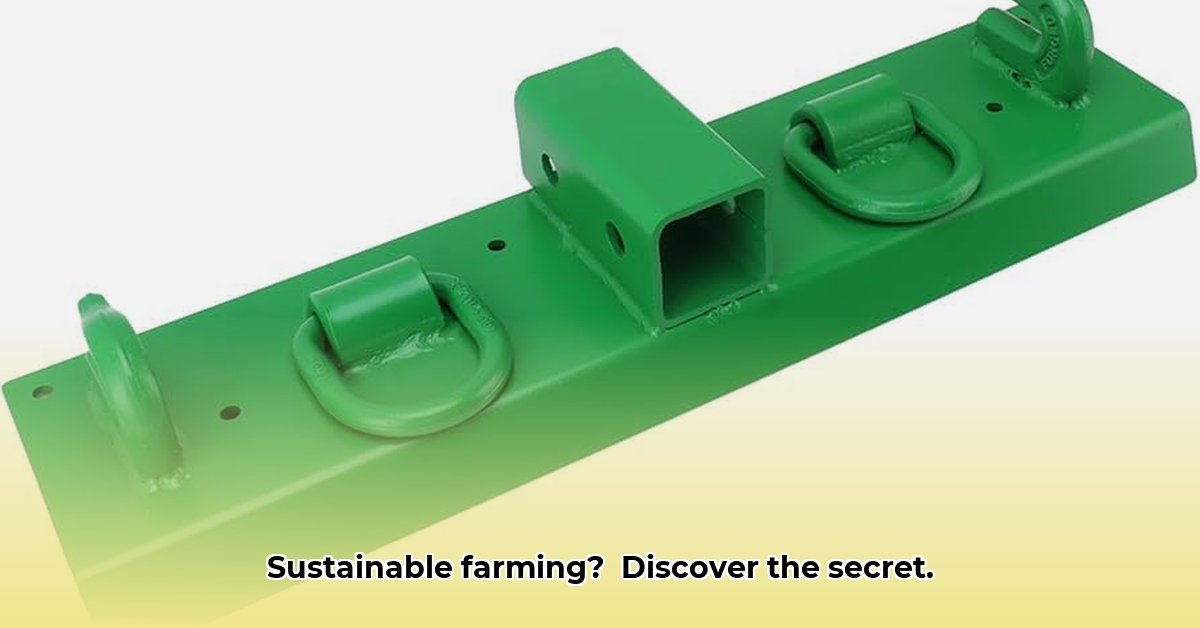
Understanding the Tractor Hook Market and its Environmental Impact
Tractor bucket hooks, seemingly simple implements, play a crucial role in modern agriculture. Their widespread use, however, necessitates a critical examination of their environmental footprint. This guide provides actionable intelligence for farmers, manufacturers, and policymakers seeking sustainable solutions. The market currently features a range of hooks, predominantly constructed from steel alloys chosen for their strength and durability. However, the production, use, and disposal of these hooks present significant environmental challenges. For more information on sustainable agricultural practices, check out this resource on sustainable farming.
The Lifecycle Assessment: From Mine to Landfill
The environmental impact of tractor hooks spans their entire lifecycle. Steel production, a primary source of hook material, is energy-intensive and contributes to greenhouse gas emissions. Transportation from manufacturing facilities to farms further adds to their carbon footprint. Improper disposal generates waste and potentially contaminates soil and water resources. Isn't it time we examined the sustainability of this entire process? What are the alternatives?
Key Environmental Concerns:
- High energy consumption in steel production: Steel manufacturing is a significant contributor to greenhouse gas emissions.
- Transportation emissions: The shipment of hooks from factories to farms contributes to the carbon footprint.
- Waste generation and potential contamination: Improper disposal of used hooks contaminates soil and waterways.
Actionable Recommendations for Sustainable Practices
This section details specific actions for manufacturers, farmers, and policymakers to improve the sustainability of tractor hook production and use.
1. For Manufacturers:
- Conduct a comprehensive lifecycle assessment (LCA): A detailed LCA identifies environmental hotspots in the production process, from raw material extraction to disposal. This rigorous analysis guides the implementation of improvements.
- Prioritize sustainable materials: Explore the use of recycled steel, known for it's lower carbon footprint than virgin steel. Investigate and develop the use of bio-based composites where feasible. Note that research and development into environmentally friendly alternatives are ongoing.
- Design for durability and repairability: Durable, easily repairable hooks reduce the need for frequent replacements, minimizing waste and the associated environmental cost. Modular designs facilitate easier part replacement and extend the hook's operational lifespan.
- Optimize hook design for minimal soil compaction: Ingenious engineering can minimize soil compaction. This reduces soil damage and improves agricultural yields. Consider the angle and curvature of the hook, as well as its weight and material.
2. For Farmers:
- Choose durable, high-quality hooks: Investing in longer-lasting hooks reduces the need for frequent replacements, minimizing environmental impact. How many hooks does your operation go through each year?
- Employ precision farming techniques: Precise equipment operation minimizes unnecessary soil disturbance.
- Maintain your hooks diligently: Regular inspections and maintenance extend hook lifespan.
- Dispose of old hooks responsibly: Adhere to local regulations for recycling or proper disposal to prevent environmental harm. Proper disposal practices are essential to protecting our environment.
3. For Policymakers:
- Invest in research and development: Support research into sustainable materials and manufacturing techniques for agricultural equipment.
- Incentivize sustainable practices: Financial incentives or tax breaks encourage manufacturers to adopt greener practices.
- Create clear disposal and recycling guidelines: Clear regulations ensure the proper disposal and recycling of agricultural equipment, minimizing environmental harm.
Tractor Hook Design and Soil Health: A Critical Interplay
The design of a tractor hook significantly influences soil health. Heavy, poorly designed hooks compact the soil, reducing its ability to retain water and nutrients, negatively impacting crop yields and overall soil fertility. Improved hook design can mitigate this damage. Research is ongoing into innovative designs that minimize compaction while maintaining functionality.
How can hook design minimize soil compaction? Appropriate design considerations include the hook's weight distribution, contact area, and material composition.
Case Studies: Real-World Examples of Sustainable Practices
While comprehensive published data is limited, several farms are already implementing sustainable practices. For instance, some farms utilize recycled steel for their hooks, reducing reliance on virgin materials and lowering carbon emissions. Other farms use techniques such as regular maintenance and repair, extending the lifespan of their hooks. These examples highlight the potential for widespread adoption of sustainable practices.
Conclusion: Building a Sustainable Agricultural Future
By considering the entire lifecycle of tractor hooks—from material sourcing to responsible disposal—we can progress toward a more sustainable agricultural sector. Sustainable practices aren't just environmentally beneficial; they also contribute to the long-term economic viability of farming. The investment in sustainable tractor hooks is an investment in a healthier planet and a productive agricultural industry.